 en


Colombian visual artist and muralist GLEO has spent more than a decade moving between public walls and studio painting, developing a visual language rooted in memory, identity, and introspection. Born in Bogotá and studied Visual Arts at Universidad del Valle, her work inhabits a space where personal history, collective experience, and the natural world converge.
Known internationally for her murals, she explores themes that extend far beyond public space. Her paintings delve into what remains within the body: memories, emotions, and experiences that continue to resonate long after they occur. Through portraits, symbolic elements, and vibrant color harmonies, she creates silent atmospheres that invite reflection on identity, existence, and belonging. Her work has become part of major collections including the Museum of Contemporary Art of Bogotá, the STRAAT Museum in Amsterdam, and the Ulrich Museum of Art in Wichita. In 2021, she received the Abbey Mural Award from the National Academy of Design in New York, and in 2022 she was invited by the Mauritshuis Museum in The Hague to reinterpret one of the museum’s masterpieces as a large-scale mural for its bicentennial celebration.
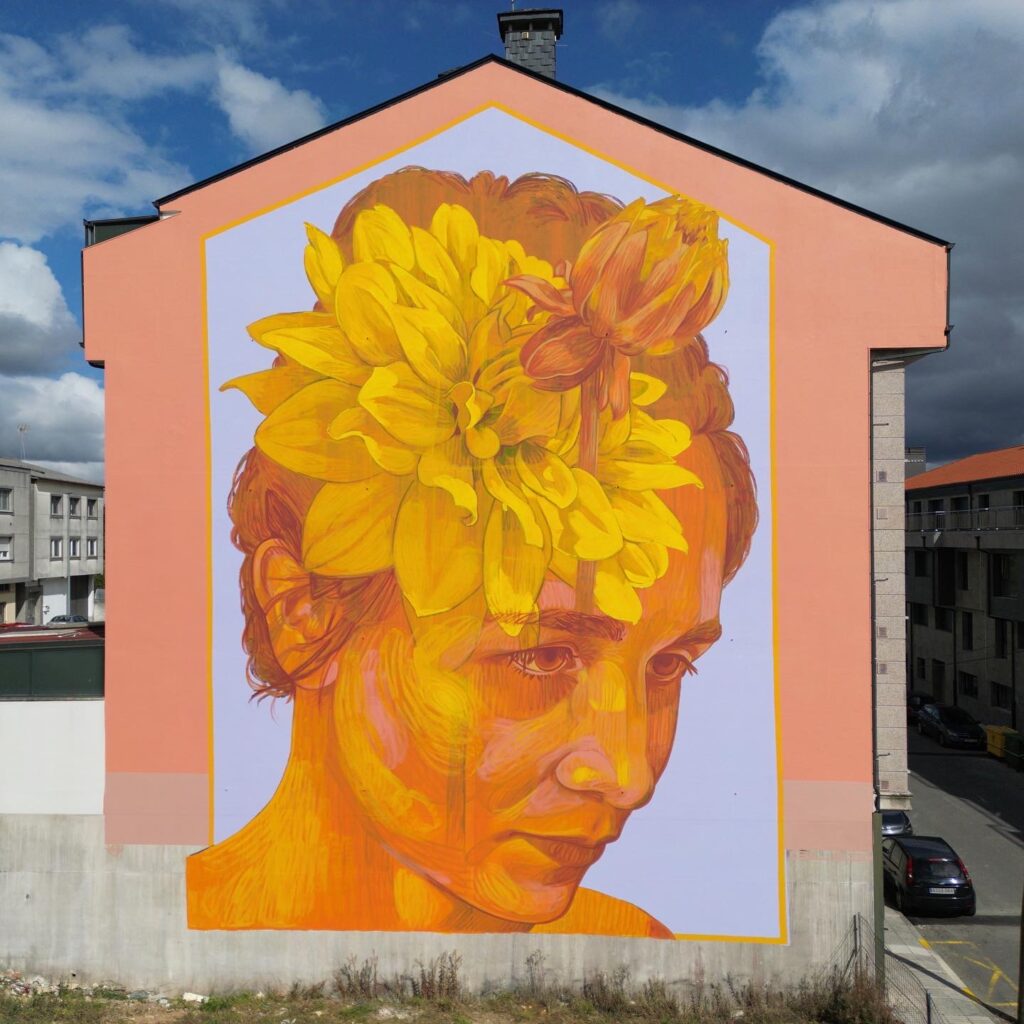
The Body as Territory
At the core of GLEO’s practice lies an ongoing reflection on the body as a territory. Every work emerges from a shared foundation: the continuous search for the fragmented pieces that shape identity and history. As a human being, and as part of nature and the universe, she approaches painting as a means of understanding existence and her place within it. For her, painting is not simply a profession or artistic discipline. It is a natural impulse, something she feels she was born with and something that will remain with her throughout her life. Through it, she has found a space for reflection, expression, and connection. More than anything, she is driven by the possibility of sharing and contemplating what it means to exist in the world.
Living Through the Environment
The environment does not function merely as a backdrop for her work. It is an active participant in her creative process. Through daily interactions, conversations, shared experiences, and direct contact with nature, she allows the world around her to permeate her consciousness and ultimately find its way into the painting. When working in public space, the mural itself becomes an excuse for something larger: the opportunity to share life with others. For her, painting publicly is also an exercise in claiming the simple pleasure of existing and inhabiting a space together. The artwork becomes inseparable from the people, places, and moments that surround it.
Color as Visual Music
Color occupies a deeply personal place within her artistic language. Growing up in Colombia, she was surrounded by vibrant landscapes, intense sunlight, colorful markets, fruits, vegetation, and people. These experiences shaped the way she understands and experiences color today. Rather than seeing color as a purely visual element, she compares it to music. Each hue functions like a musical note, capable of creating harmonies and emotional resonances when combined with others. Through her paintings and murals, she composes what she describes as a form of visual music, an attempt to create emotional connections that reach people on a subconscious level. Color becomes an act of affection, communication, and shared experience.
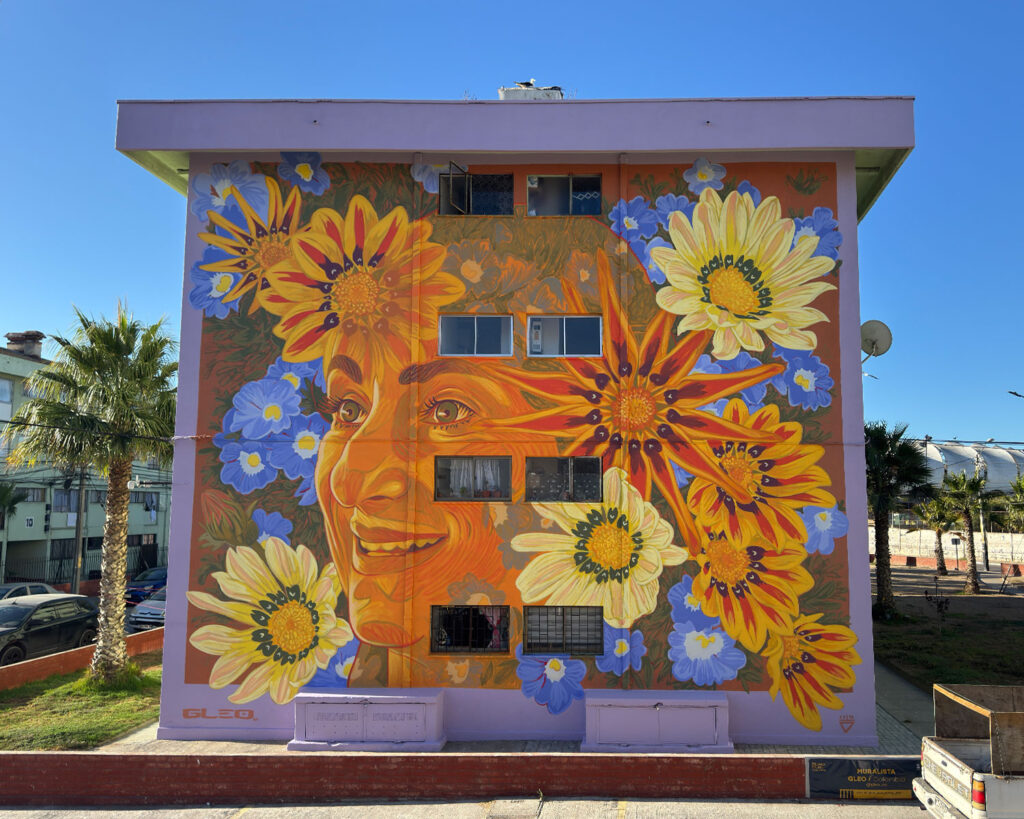
When Productivity Gets in the Way
For GLEO, a bad creative day does not necessarily stem from a lack of ideas. Instead, it appears when productivity becomes an obsession and begins to replace the experience of living itself. The pressure to constantly produce can create distance from the everyday moments that nourish creativity in the first place. In those moments, the challenge is not making more work, but reconnecting with life beyond work. Creation, after all, cannot be separated from the act of living.
The Art of Living
When asked about artistic influences beyond painting, her answer extends far beyond traditional disciplines. She speaks of the art of living fully. Music, cinema, literature, cooking for loved ones, contemplating nature, feeling the rain, enjoying the warmth of the sun, and resisting the anxiety that often dominates contemporary life all become forms of artistic practice. Underlying this perspective is the concept of “Sumak Kawsay”, often translated as “good living” or “living well,” a philosophy that values harmony between human beings, community, and nature. For her, art is not isolated from life. It is woven into the everyday experience of being alive.
Creative Freedom
If there is one thing she would like to change about the way we experience art today, it is the way creativity is often confined or restricted. She believes creation is one of the most liberating and beautiful capacities human beings possess. More than anything, she hopes people can reclaim greater creative freedom within their daily lives, allowing imagination, experimentation, and expression to exist beyond professional artistic practice. Creativity belongs to everyone.
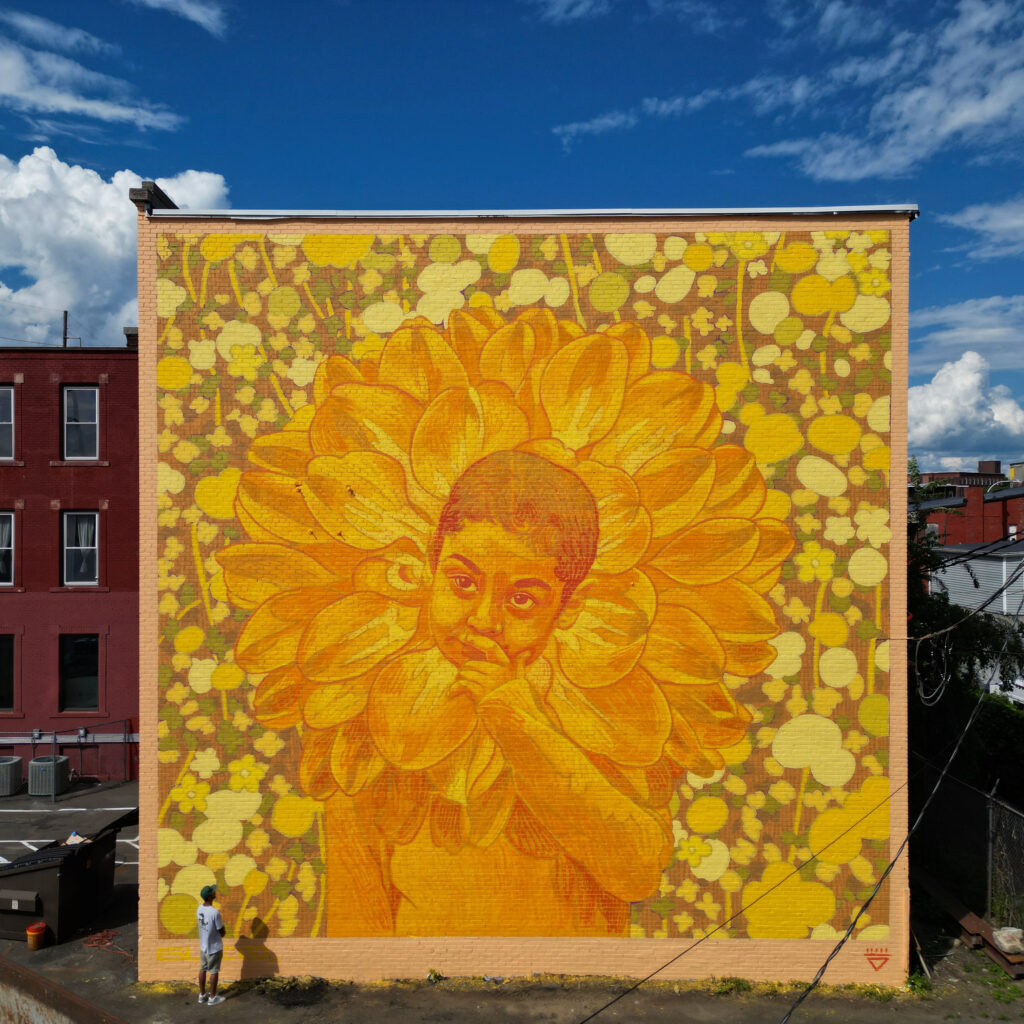
Freedom to Feel
When someone stands in front of one of her works, she carries no expectations. Rather than directing the viewer toward a specific interpretation or emotional response, she hopes they feel free to experience the work in their own way. The encounter belongs to them. Whatever emotion, memory, or thought emerges is valid.
Community, Music, and Shared Learning
Among the people who have influenced her most, GLEO does not begin with famous names. Instead, she speaks first about friends, companions, and the people who have shared life with her. Through those relationships, she has learned that art can be approached as a game, something meant to be shared rather than possessed. Music remains another constant source of inspiration. Rather than returning to the same songs repeatedly, she continuously searches for new sounds, using music as a way to break cycles of repetition and comfort. For her, discovery remains an essential part of the creative process.
Looking Ahead
When imagining future artists for Art & The City, GLEO highlights creators from across Latin America whose work she deeply admires, including Ritos Sin Sermones from Colombia, Stinkfish, Pao Delfin from Mexico, Pri Barbosa from Brazil, INTI from Chile, and the late Hyuro, whose influence continues to resonate throughout the contemporary mural scene.
In her universe, painting is more than image-making. It is a space where memory, color, identity, and lived experience come together. Through murals and paintings alike, she transforms personal reflection into shared language, inviting viewers to pause, feel, and reconnect with the deeper rhythms of existence.

You can follow her on Instagram to discover more of her work, or visit her website directly.

